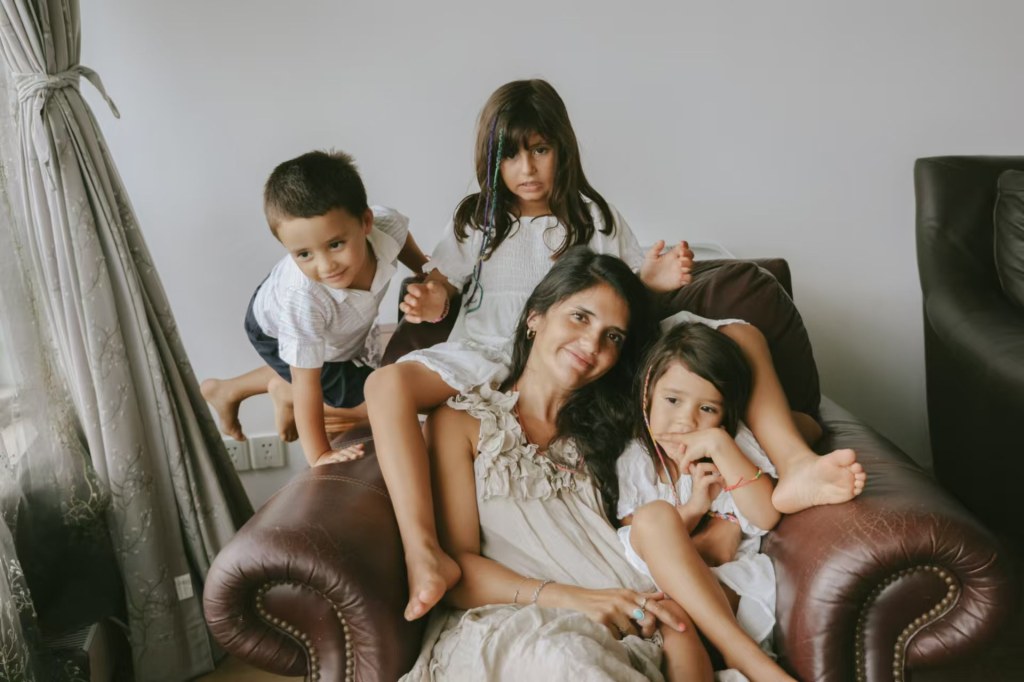
Miki has a Spanish mother and an Italian father. She was raised in northern Italy, near Switzerland. When she was 17 years old, her mother was diagnosed with cancer and sadly passed away a year later. Miki reflects, “My dad was depressed, and I wanted to stay close to him to support him.” As a result, she studied Marketing in Milan while continuing to live at home.
She excelled in basketball and soon became a basketball coach at a Montessori school. Her interest in children’s education began at that time. She shares, “I learned a very valuable lesson: you don’t need to earn respect. You don’t need to be an adult to be respected. Kids need to be respected too. It made me realize how differently I was raised.”
Miki’s mother is from Segovia. Miki felt the urge to explore her mother’s roots. As a result, she decided to move to Madrid, Spain. She initially worked for TripAdvisor, but her passion for education proved to be more compelling. Consequently, she chose to leave that position and began working at a Montessori school, teaching and working with marketing.
Soon, she got an opportunity to relocate to Germany, where spent two years, and then moved back to Madrid, where she opened her consulting marketing agency. It was also in Madrid that she met her husband. Less than a year later, she became pregnant, and in 2017, they welcomed their daughter, Chloe.
Miki’s husband received an offer to move to Beijing, China, where they lived for eight months before relocating to Shanghai. Her husband’s work is in gastronomy, which led to an opportunity for them to move to a small island in Thailand. Soon they discovered that they were expecting twins! Miki struggled to imagine delivering her twins on an island that lacked proper hospital facilities. Therefore, they decided to move back to China, where they live now.
Her journey as a Parenting Coach

Miki shared that while she was pregnant with Chloe, she wanted to fully embrace her pregnancy. To do this, she became a birth and postpartum doula, as well as a lactation consultant. It helped her to deliver Chloe naturally, without an epidural, and described it as a beautiful experience.
Her second pregnancy was very different; there were more complications, and she had to undergo a C-section. She says, “Sometimes, you need to accept things as they are. I had many tools that could have helped me deliver these babies beautifully, naturally, but the circumstances were different, so I needed to accept the situation as it was.”
In 2020, her twins, Gala and Noel, were born. She needed to continue working, so she kept all her sessions even after their arrival. “Often, I needed to interrupt my sessions to calm my crying babies. But it was very important to me to keep working,” she said.
Being a parenting coach taught her a valuable lesson that she hoped to share: “We want things to go perfectly and smoothly, but sometimes imperfection is perfection.”
In parallel, she became a Holistic Sleeping Coach. Also, as a mother, she developed a greater desire to understand children, which led her to obtain certification in educating children of different ages.
Her Journey as a Mom
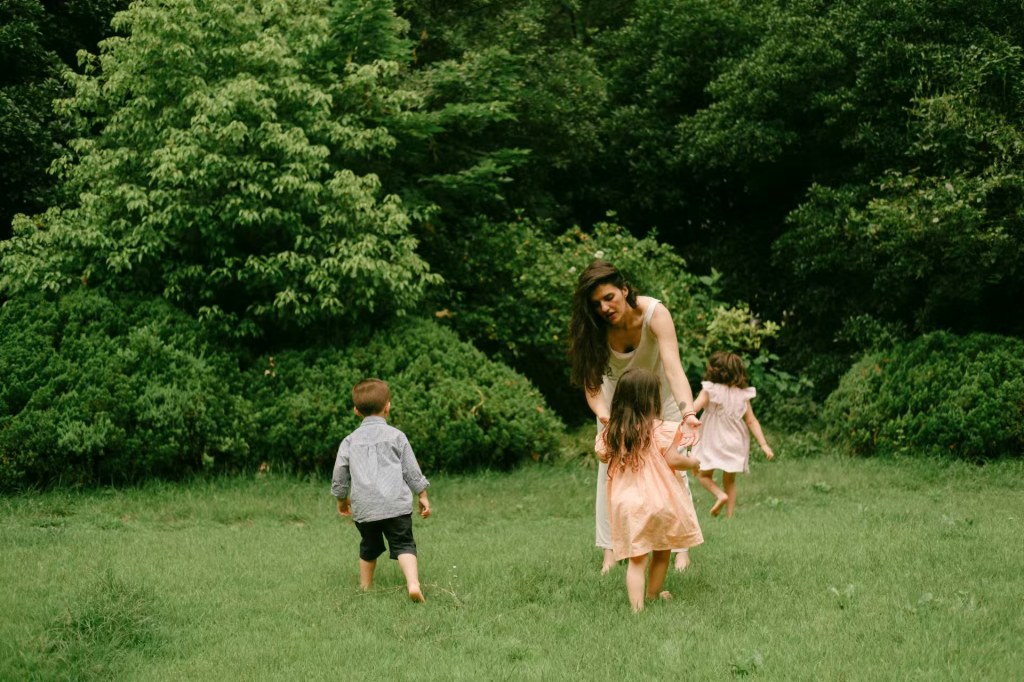
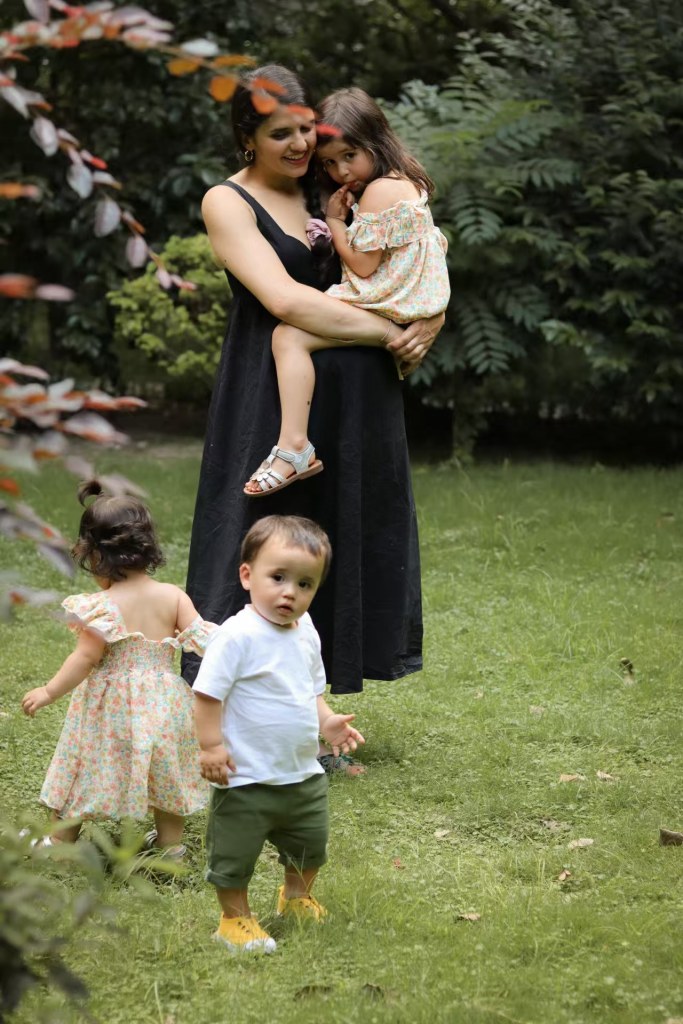
Miki states that becoming a mother of three has made her realize the importance of loving each child according to their unique personality and needs. You cannot love them all in the same way; instead, you must love each of them individually based on who they are and the type of love they require.
“My three kids are completely different from each other. My oldest, Chloe, is a hypersensitive child who is very physical and needy, but also very sociable. My daughter, Gala, is more logical and independent. My son, Noel, is a boy with a big heart. He is very brave and constantly tests my limits.”
She is raising her children in a free, non-competitive environment where communication and listening are emphasized. “I am not someone who yells; I reserve that for very critical situations,” Miki explains. She acknowledges that she and her husband sometimes have different parenting approaches, for instance regarding screen time. However, this is perfectly fine. Their kids know what to expect from each parent and learn from both.
Real-Life Lessons
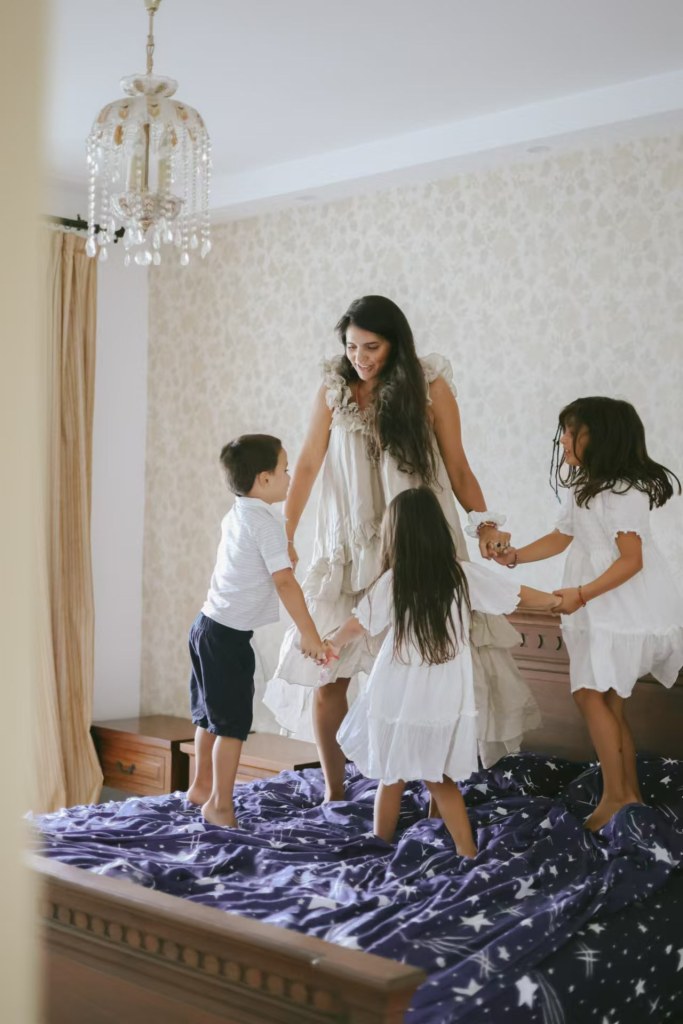
Miki recalls a day when she realized she was being observed—not just in how she behaves with her children, but also in how her children behave. This realization makes her laugh because, as a coach, she understands that things don’t have to be perfect and that there isn’t a tool for every situation. She believes that sometimes not having any tools can be a valuable lesson as well. After all, we are humans and don’t need to strive for perfection.
One of the most challenging periods of her life was after she gave birth to twins. This experience occurred during the pandemic while they were in China, far from home and without any assistance. Miki needed to care for the newborn twins as well for her three-year-old, who needed her attention more than ever. To make matters worse, her husband was hospitalized for two months due to health complications. Miki describes this time as incredibly difficult, but she also emphasizes her natural ability to navigate tough situations. Instead of panicking, she devised a plan of action. She recounts a similar experience when her mother was diagnosed with cancer; upon receiving the news, she did not retreat into herself but focused on understanding what could be done to help.

As a mother of three, she frequently finds herself in situations where she is also learning.
One issue that triggers her is the fighting between her oldest daughter and her son, which often escalates into loud yelling. Miki shares a story about her youngest daughter, Gala, who was feeling anxious about starting kindergarten. One day, she came home and asked Miki to record a video for a homework assignment to help her prepare for school. Miki took Gala to another room to try recording this video, but they had to make five attempts because of the yelling in the background. At one point, Chloe and Noel entered the room. When Chloe saw Miki recording the video with Gala, she exclaimed, “You’re so unfair, Mom! You’re with her just because she wants to be perfect.” Miki paused and the idea of involving her crossed her mind, so she responded, “Do you want to know what’s happening here? Gala is scared; she’s scared of kindergarten and doesn’t feel ready.” Suddenly, Chloe said, “I know what to do! Come on, Gala, I will teach you.” Miki explains that involving her children in these situations often works. When they feel included rather than sidelined, they may react in surprising ways—just like Chloe did.

Another situation that comes to her mind is when her daughter, Gala shared that two girls, who were supposed to be her friends, called her ugly and said they didn’t want to be friends anymore. Miki believes that no matter how much experience you have as a parenting coach with tools and effective responses, it still hurts deeply when someone tells your five-year-old daughter that she is ugly. She thinks that a proper reaction is essential, starting with acknowledging Gala’s feelings and discussing them openly. Miki emphasized the importance of teaching Gala to express her feelings and not be afraid to tell others when they speak to her disrespectfully. She believes that giving children the ability to say, “Stop, I don’t like that,” is incredibly beneficial for their lives. Understanding and communicating feelings is crucial for children, especially as they grow.
On the other hand, Chloe is a sociable child who easily makes friends, but she has recently become quite selective. She had a conversation with Miki about friendship, focusing on the importance of being more open. This discussion ultimately led to a sleepover at her house, where many of Chloe’s friends were invited to join and enjoy their time together.
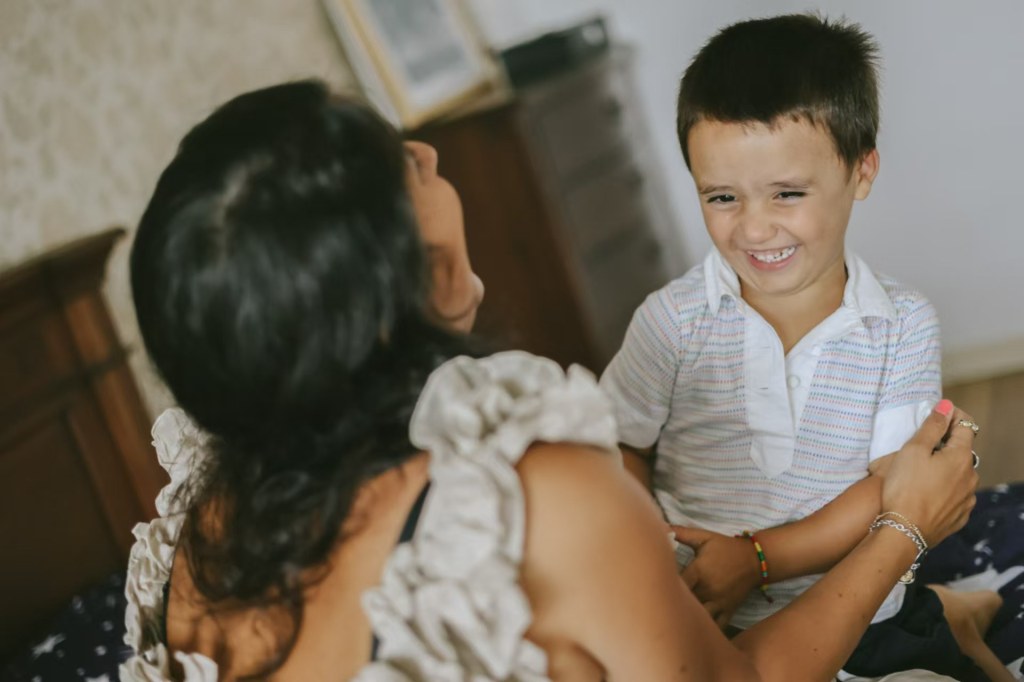
Noel used to struggle with feelings of inadequacy, believing he couldn’t do certain things. Miki explains that helping him understand his strengths and weaknesses has contributed to developing his healthy self-esteem. “For example, he excels in sports and has a big heart. He always thinks of his sisters; when I give him a biscuit, he instinctively divides it into three parts to share with them. I often tell him that he has a gentle heart.”
As adults, we often expect our children to behave a certain way simply because we tell them to. Miki emphasizes that simply telling them is not enough; we need to show them and set an example. She shares that Chloe was constantly switching between sports activities and never sticking with any of them. In response, Miki decided to commit to practicing yoga regularly. She noticed that when Chloe observed her dedication, she also changed her approach and was able to focus on one activity. We are our children’s first teachers, and they learn from us at home.
Life Advice
“Believe in yourself. Believe in your potential, your dreams, and your abilities. Be proud of who you are; you are perfect exactly as you are. Love is all around you—embrace it, enjoy it, and shine brightly. Come back whenever you wish; I’ll always be here for you.
Thank you to my three greatest life teachers. Thank you to my children for being the missing pieces of my very own puzzle.”
 Mamas' Stories
Leave a comment